
60 Days in Oahu With Kids: What We Changed the Second Time
The first time we decided to take our four girls to Oahu for a month, we had a lot of questions.
Would we feel safe living there for 30 days? Were we choosing the right neighborhood? What about hurricanes, tsunamis, bugs and everything else that comes with living on an island in the middle of the Pacific?
How much would it cost to live there for a month?
And maybe the biggest question:
Would we get bored?
We had taken plenty of family vacations before, but this was different. We weren’t booking a resort for a week and trying to fit as much as possible into seven days.
We were going to live in Hawaii for a month.
Our first stay in Kailua was during June and July 2025. We loved it so much that on June 9, 2026, we came back and did it all over again, staying through July 18.
But the second trip wasn’t a repeat of the first.
We took everything we learned during those first 30 days and changed some pretty significant things the second time around.
After spending roughly 60 days living in Kailua over two summers, we learned a lot about Oahu.
We also learned a lot about how our family likes to travel.
Table of Contents
Our First Time in Oahu With Kids: Why We Chose Beachfront
With four kids, direct beach access seemed non-negotiable.
I couldn’t imagine loading four sandy kids, towels, surfboards, beach toys and everything else into a minivan every time we wanted to go swimming.
So the first year, we went all-in.
We rented an incredible gated beachfront mansion in Kailua through Airbnb.
It cost about $75,000 for the stay.
It was beautiful, secure and gave us exactly what we thought we wanted: we could walk out of the house and essentially be at the ocean.
For our first month in Hawaii, that gave us some peace of mind too. We were nervous about the neighborhood, safety and what living in Hawaii would actually be like.
Then we started learning.
Lesson #1: Beachfront Wasn’t Actually Better for Us
Kailua is on the windward side of Oahu, and during June and July we experienced the trade winds almost every day.
We loved them.
They kept the temperatures comfortable and were one of the reasons Hawaii rarely felt unbearably hot to us during the summer. We also didn’t have much trouble with bugs around the house or beach, which I think the wind helped with.
But there was something we hadn’t really considered before booking a beachfront house:
You’re also living directly in that wind.
Trying to sit outside or eat at an outdoor table could be difficult.
We had this incredible beachfront property, but the wind sometimes made the outdoor living space less usable than we expected.
So when we returned the second summer, we did something that would have made me nervous the first time.
We didn’t rent a beachfront house.
The Second House Cost $30,000 Less — And Worked Better
By Year 2, we knew Kailua.
We knew we loved the town. We felt safe there. We knew where we liked to shop, where we wanted to surf and what everyday life felt like.
So we rented another Airbnb about two or three houses back from Kailua Beach.
There was a beach path about 160 steps from our house. We could leave the house and be standing at the water in roughly three minutes.
But now we were protected from the constant wind coming directly off the beach.
The house had five bedrooms, three bathrooms, a full kitchen, washer and dryer, air conditioning in every bedroom, a huge outdoor area and a pool.
For a month-long summer stay, AC in every bedroom is something I would absolutely look for again.
The kids used the pool every day.
We could hang out in the backyard. We could actually enjoy the outdoor space. And whenever we wanted the ocean, we walked three minutes down the beach path.
The price?
About $45,000.
We spent roughly $30,000 less than we had the first summer, and the second house actually worked better for the way our family lived.
That was probably our biggest housing lesson from doing Kailua twice:
For our family, being very close to the beach was better than being directly on the beach.
We Weren’t Staying at a Resort for 30 Days
This is probably the most important thing to understand about the way we approached these trips.
We weren’t trying to vacation for 30 straight days.
We were living there.
There’s a difference.
When you’re somewhere for a week, you can wake up every morning with an itinerary.
When you’re somewhere for a month, you need a life.
We developed routines.
We’d usually wake up with the sun. After spending long days outside—and maybe having a few drinks at night—we tended to go to bed pretty early.
We’d get up, cook a nice breakfast and figure out what we felt like doing.
Some days we had an adventure planned.
A lot of days we didn’t.
And that became one of our favorite parts of staying for a month.
Kailua Beach Became Part of Everyday Life
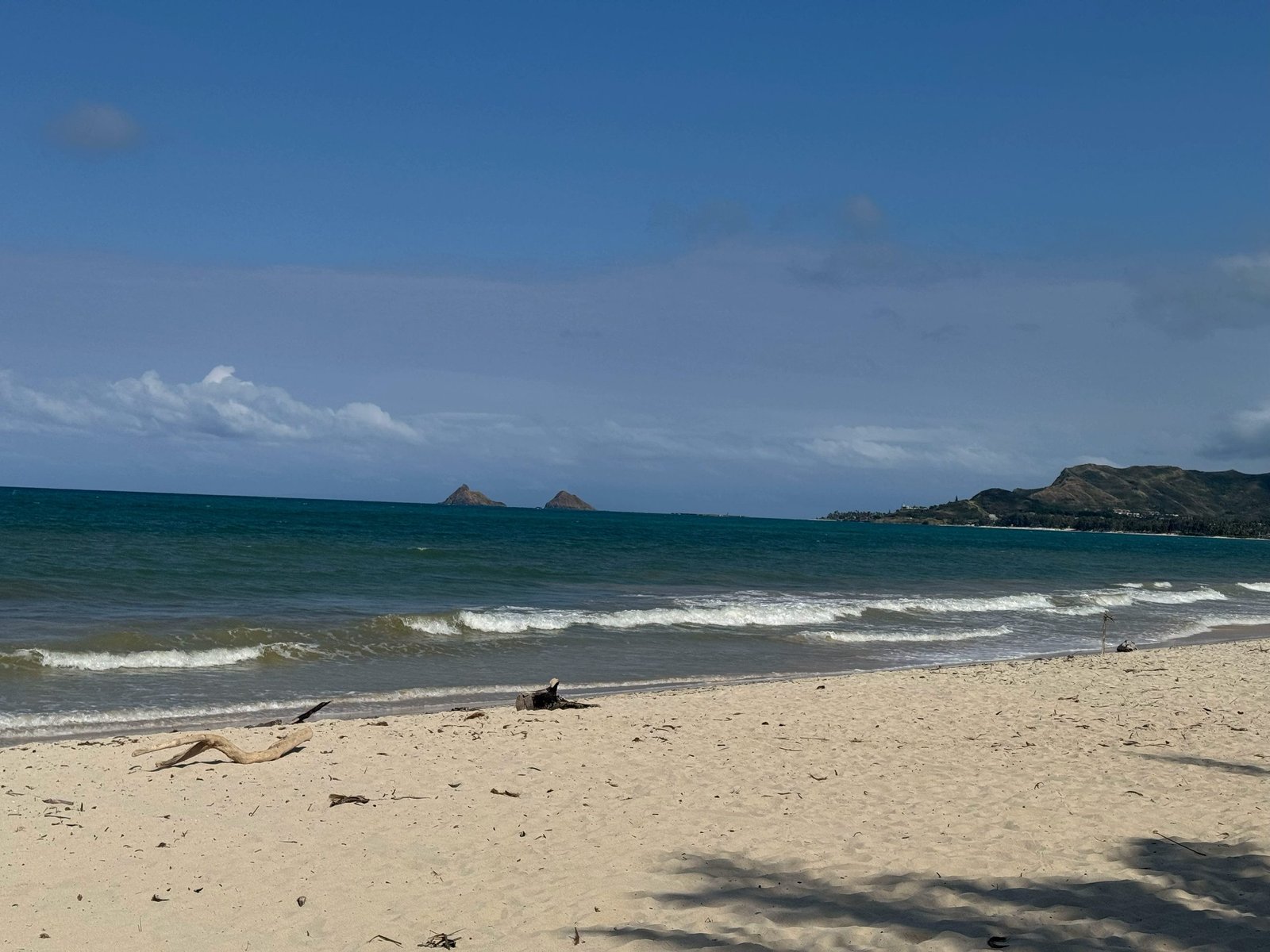
Kailua Beach was our everyday beach.
But we rarely “went to the beach” the way we would on a traditional vacation.
We didn’t need to load chairs, umbrellas, coolers, toys and half the house and then set up camp for eight hours.
Most of the time we’d grab a surfboard, towel and some water and walk down.
If we forgot something, who cared?
The house was three minutes away.
Our rental also had boogie boards and beach toys, and we surfed right at Kailua Beach.
During our summer stays, we generally found the water manageable for our family, with waves that were a good size for us and not much of an undertow.
Surfing became something we could do regularly instead of an activity we scheduled once during the vacation.
And sometimes it rained.
One of the things I loved about Hawaii was watching a rain shower come through and realizing nobody left the beach.
Everyone just kept swimming and surfing like it wasn’t raining.
Eventually, so did we.
The Farmers Markets Became One of Our Favorite Parts of Kailua
If you had asked me before our first trip what we’d love most about living in Hawaii, I probably wouldn’t have said farmers markets.
But they became a huge part of our routine.
We loved both the Kailua Farmers Market and KailuaTown Farmers Market, and some weeks we’d visit markets two or three times.
It gave us a reason to get up, get out and shop locally.
We’d buy fresh produce and vegetables, Israeli food, gluten-free waffles and granola, homemade mochi bars, gluten-free breads, muffins and cakes, coffee, juices and lemonades.
There were also local vendors selling jewelry, clothes and crafts.
One of the markets was held Thursday evening, and that became dinner for us.
That’s one of the differences between visiting somewhere and living there.
The farmers market wasn’t an attraction we crossed off our Hawaii list.
It became part of our week.
We Didn’t Eat at a Restaurant Once
Kailua has plenty of nearby restaurants, shops, surf stores and even a movie theater. We actually went to the movies there and saw Moana 2, which was pretty fitting for where we were.
But during our second stay, we didn’t eat at a restaurant once.
Not because there weren’t good restaurants.
We just didn’t need to.
We had a full kitchen, and cooking became part of our routine.
One of the best things we did was use a Crock-Pot.
We could put a beef stew or something similar together in the morning, go enjoy the entire day and come home with dinner waiting.
We also cooked tacos, fish, chicken dishes and normal meals we’d make at home.
The Thursday farmers market gave us a night when we could grab dinner there.
And Bob’s Pizzeria was another local food option we liked.
Overall, grocery costs felt relatively similar to what we’re accustomed to paying. We already buy a lot of organic, grass-fed and pasture-raised products at home, so Hawaii grocery prices weren’t the shock we had worried they might be.
Target, Whole Foods and Amazon Made Normal Life Easy
This isn’t the exciting part of Hawaii.
But if you’re considering living there with four kids for a month, it’s important.
We had Target 360 delivery, Whole Foods delivery and Amazon Prime.
That made daily life surprisingly easy.
Forgot something?
Order it.
Needed groceries?
Have them delivered.
We even ordered a surfboard from Amazon.
It also taught us that we didn’t need to bring nearly as much stuff as we thought.
We still overpack. Amanda has a packing routine and checklist, and somehow we still bring too much.
But if I were packing for another month in Kailua, I’d bring far fewer clothes.
Most days I wore a bathing suit and sun shirt.
I don’t think I wore shoes or socks for 30 days.
Flip-flops, water shoes, a hat, sunglasses and sun shirts were basically my wardrobe.
And you’re going to end up buying Hawaii shirts and other clothes while you’re there anyway.
Working East Coast Hours From Hawaii
I still had a business to run.
Coming from the East Coast, Hawaii is six hours behind, and initially that sounded like it could make working difficult.
It actually worked surprisingly well for me.
I woke up very early.
By the time Hawaii was waking up, the East Coast was already well into its workday. I could handle emails, calls and whatever else needed my attention early in the morning.
The payoff was huge.
By around 11 a.m., I was usually done working and had the rest of the day with Amanda and the girls.
If something needed my attention later, I could jump back onto email after the kids went to bed.
Again, we weren’t on a 30-day resort vacation.
We were trying to build a temporary life in Hawaii.
For me, that life still included running my business.
Kailua Had Everything We Needed for Normal Life
One of our concerns before spending a month in Hawaii was whether we’d feel isolated.
We didn’t.
Kailua had the small-town feeling we loved while still giving us access to everyday necessities.
There were farmers markets, Target, Whole Foods, local shops, surf shops, restaurants, a movie theater and plenty of other things nearby.
We also had a Longs Drugs and urgent care about five minutes from the house.
With four kids, knowing where the closest urgent care and pharmacy were gave us additional peace of mind.
The more time we spent in Kailua, the more comfortable it became.
After two extended stays, my feeling about the area is pretty simple:
I’d move there.
Hawaii Is Paradise, But You Still Need a Plan
Natural disasters were something I thought about before our first trip.
Hawaii is beautiful, but hurricanes, tsunamis and other weather events aren’t imaginary risks.
Our approach wasn’t to spend the month worrying about them.
It was to stay informed.
We downloaded the Hawaii News Now app and kept up with local alerts for weather, tsunami information, road and lane closures and other things happening around Oahu.
That’s something I’d recommend to anyone staying for an extended period.
You’re living there, so pay attention to the same local information people who live there pay attention to.
Tsunami warnings happen in Hawaii. Be alert, understand where you’re staying and have a plan.
Then go enjoy Hawaii.
Some of Our Favorite Adventures
The beauty of having 30 days is that you don’t need an activity every day.
But we still did a lot.
Two of our favorite family hikes were the Lanikai Pillbox and Likeke Falls.
We visited Lanikai Beach, which was about an eight-minute drive from our house and was worth the trip when we wanted especially calm water. Parking in the residential neighborhood could be difficult, though.
One of our daughters took a surf lesson in Waikiki that was incredible.
We made day trips to the North Shore, especially Haleiwa.
We visited Kualoa Ranch.
We went to the swap meet on Wednesdays and Saturdays.
We did a Sea Glass Visit with Katie Taggart.
We saw sea turtles.
And we kayaked out toward the Mokulua Islands—the Mokes.
That was an incredible roughly 2½-hour kayak experience where we were able to experience the protected natural environment and see wildlife including sea turtles, birds and Hawaiian monk seals.
Having a month meant none of this had to be rushed.
If Tuesday didn’t work, we had Wednesday.
If it rained, we had next week.
That’s a completely different way to experience Oahu.
Lesson #2: We Only Needed One Night at Aulani
Aulani was another thing we changed after the first summer.
The first time, we left Kailua and spent two nights at Disney’s Aulani.
We had a great time.
But afterward we realized something:
We could get what our family wanted from Aulani in one night.
So the second summer, that’s exactly what we did.
We planned our visit for June 26—6/26—Stitch Day at Aulani, which made it especially fun for the girls.
We arrived early.
Even though you’re staying only one night, arriving early lets you check in and start enjoying the resort amenities, so we could turn that first day into a full pool and water day.
We stayed overnight.
The next morning, we did a character breakfast, met the characters and enjoyed the resort for a little longer.
Then we headed back to Kailua.
The drive was roughly 45 minutes for us.
After experiencing Aulani both ways, one night was the sweet spot for our family.
We still got our Disney fix without giving up several days of the slower Kailua lifestyle we were there to enjoy.
We Rented the Same Kind of Vehicle We Drive at Home
For our month in Kailua, we rented a minivan through Avis.
We found the 30-day rental surprisingly affordable.
And we specifically chose a minivan because that’s what we drive at home.
We already knew it worked.
We knew we could fit our family of six, five suitcases, carry-ons and our Zoe double stroller.
Our Zoe was also light enough that we could take it through the airport and to the gate when flying American Airlines.
Sometimes family travel doesn’t need a complicated solution.
Use what you already know works.
We Used California to Break Up the Trip to Hawaii
Getting from Philadelphia to Hawaii with four kids is a long journey.
There’s also that six-hour time difference.
Instead of treating California as a connection, we decided to make it part of the vacation.
Going west, we flew first class from Philadelphia to Los Angeles.
Then we spent five days at Disneyland.
We used our Disney Vacation Club points to stay at Disney’s Grand Californian Hotel, so there wasn’t an additional cash hotel cost.
We used a car service between the airport and Disneyland and didn’t need to rent a car while we were there.
Then we flew first class from Los Angeles to Honolulu.
We were already traveling west toward Hawaii, so we essentially added five days at Disneyland without adding another round-trip flight from Philadelphia or paying cash for our hotel room.
But there was another benefit.
It helped us break up both the flying and the time change.
Unfortunately, we didn’t apply the same logic coming home the first year.
And we paid for it.
Lesson #3: Our Flight Home the First Year Was a Disaster
The first year, we flew from Honolulu to Los Angeles.
We had about a two-hour layover at LAX, then boarded an overnight flight to Philadelphia.
On paper, that sounds efficient.
Fly overnight. Let the kids sleep. Wake up on the East Coast. Go home.
That’s not what happened.
The kids managed to sleep for a few hours.
Amanda and I basically stayed awake.
By the time we got home, everyone was exhausted and completely thrown off.
It honestly felt like it took us two weeks to recover from the trip home and the time change.
We knew that if we came back to Hawaii the following summer, we weren’t doing that again.
Why We Stopped in San Diego the Second Year
The second time, we changed the return trip completely.
We found inexpensive award availability using our American Airlines miles for a Hawaiian Airlines flight from Honolulu to San Diego.
And instead of connecting and continuing home, we stopped.
We rented a beachfront Airbnb in Mission Beach for six days and rented a car.
Then we flew back to Philadelphia.
San Diego wasn’t simply another vacation we tacked onto Hawaii.
It solved a problem.
It broke up the flight home and started moving us back toward East Coast time without asking everyone to make the entire adjustment at once.
So our overall trip looked more like:
Philadelphia → Disneyland → Kailua → San Diego → Philadelphia
The first year, we optimized our trip home for speed.
The second year, we optimized it for our family.
I’d choose the second option every time.
What Our Girls Loved Most
Our girls loved the pool.
They loved Kailua Beach.
They loved surfing, the farmers markets, Aulani, the North Shore, hiking and pretty much everything else we did.
But looking back, I don’t think the most important part was any individual activity.
It was the amount of time they spent together.
Four sisters swimming, surfing, exploring, eating, laughing and hanging around together day after day.
There weren’t as many interruptions from normal life.
They had enough time together to develop a different kind of friendship with each other.
That’s one of the things I’ve come to appreciate most about longer travel.
You’re not just creating vacation memories.
You’re giving your family time.
Would We Spend Another Month in Kailua?
Absolutely.
If you’d asked me after our second summer whether I’d spend another month in Kailua the following year, the answer would have been easy.
I’d do it every year if I could.
Then Italy came into the picture.
Those two summers in Hawaii taught us something much bigger than whether we liked Oahu.
They showed us that our family doesn’t just enjoy vacationing somewhere together.
We enjoy living somewhere else together.
We like finding our grocery stores.
We like going back to the same farmers markets.
We like cooking dinner at home.
We like having a favorite beach.
We like developing routines.
I can work.
We can do laundry.
The kids can have days when absolutely nothing remarkable happens.
Eventually, a place starts to feel familiar.
And after doing that successfully in Kailua twice, spending several months somewhere else didn’t seem quite as crazy anymore.
In a lot of ways, those 60 days in Kailua helped give us the confidence to take our next—and much bigger—detour.
Packing up our family of six and living in Tuscany for three months.
And that’s where we’re headed next.